
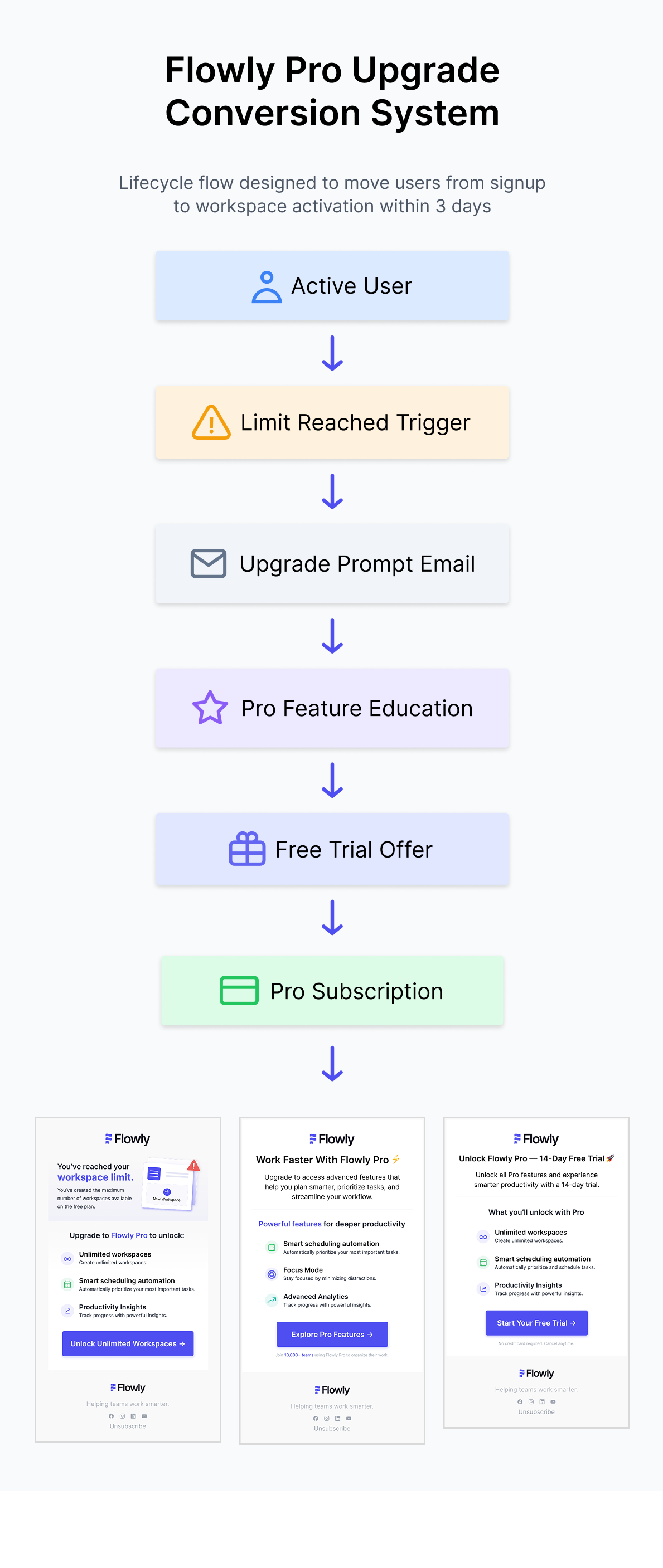
Designed a behavior-based upgrade lifecycle that converts highly engaged free users into paid subscribers through contextual messaging, feature reinforcement, and value-based trial offers.
Project Details
Platform: Klaviyo + Figma
Focus: Lifecycle Marketing • Monetization Strategy • SaaS Conversion
Trigger: Product Usage Thresholds + Behavioral Signals
Focus: Lifecycle Marketing • Monetization Strategy • SaaS Conversion
Trigger: Product Usage Thresholds + Behavioral Signals
The Opportunity
Many SaaS products introduce upgrade messaging too early, before users have experienced enough value to justify a purchase decision.
As a result:
• Upgrade prompts are ignored
• Trial adoption remains low
• High-intent users fail to convert
• Upgrade prompts are ignored
• Trial adoption remains low
• High-intent users fail to convert
The opportunity was to create a lifecycle that identifies engaged users and introduces monetization at moments of demonstrated product value.
Conversion Strategy
Rather than relying on generic upgrade promotions, the lifecycle was built around behavioral intent signals.
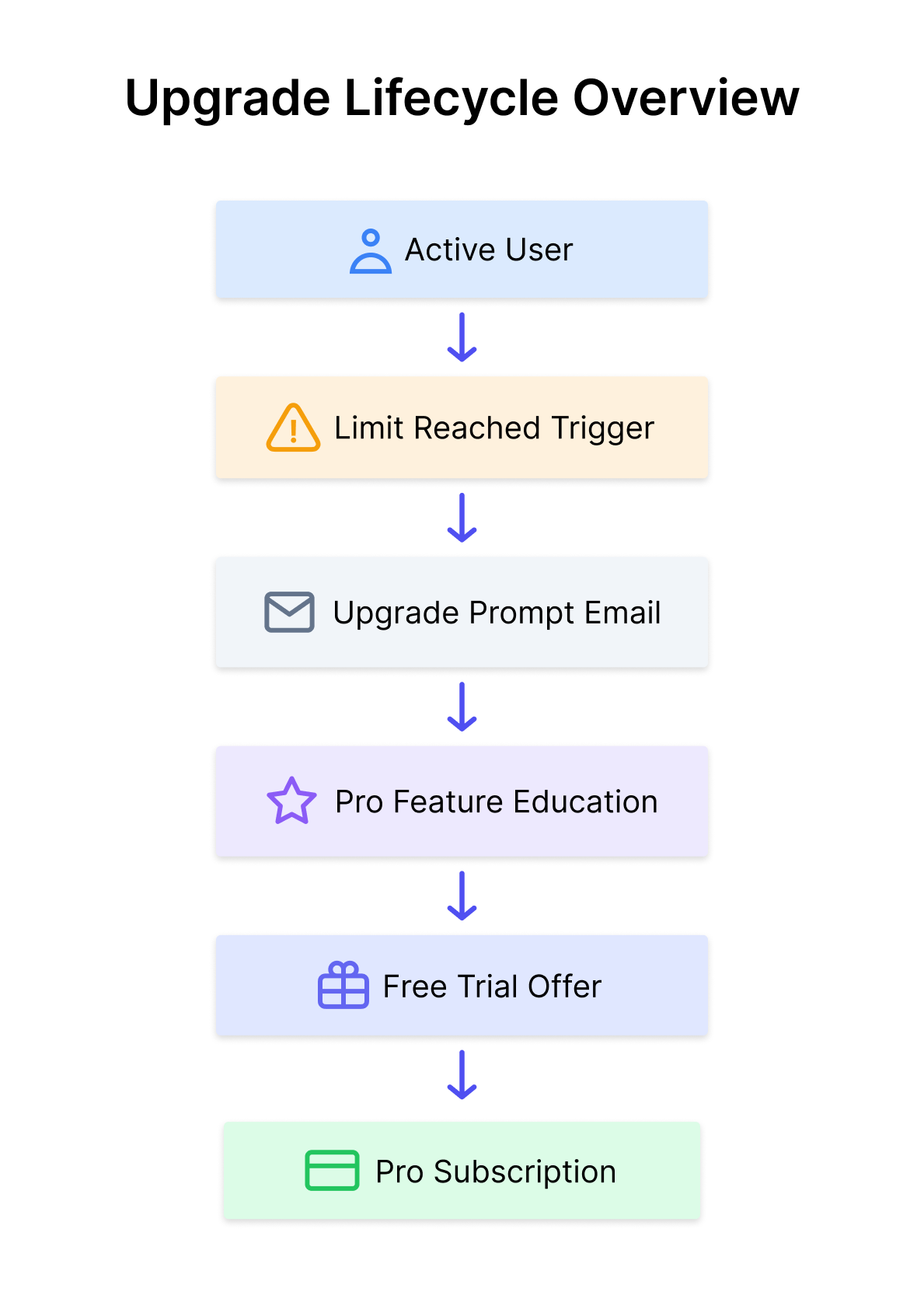
The framework follows a progressive conversion path:
• Usage Limitation: Create awareness of product constraints.
• Feature Reinforcement: Connect premium features to real user needs.
• Trial Activation: Reduce purchase friction through guided product exploration.
• Paid Conversion: Transition qualified users into subscription plans.
• Feature Reinforcement: Connect premium features to real user needs.
• Trial Activation: Reduce purchase friction through guided product exploration.
• Paid Conversion: Transition qualified users into subscription plans.
Identifying Conversion Triggers
Before designing the automation, I mapped the behaviors most strongly associated with upgrade intent.
Key signals included:
• Approaching workspace or usage limits
• Repeated feature engagement
• High-frequency platform usage
• Continued product adoption beyond initial onboarding
• Approaching workspace or usage limits
• Repeated feature engagement
• High-frequency platform usage
• Continued product adoption beyond initial onboarding
These behaviors became the foundation for lifecycle segmentation and messaging logic.
Stage 1 — Usage Limit Trigger
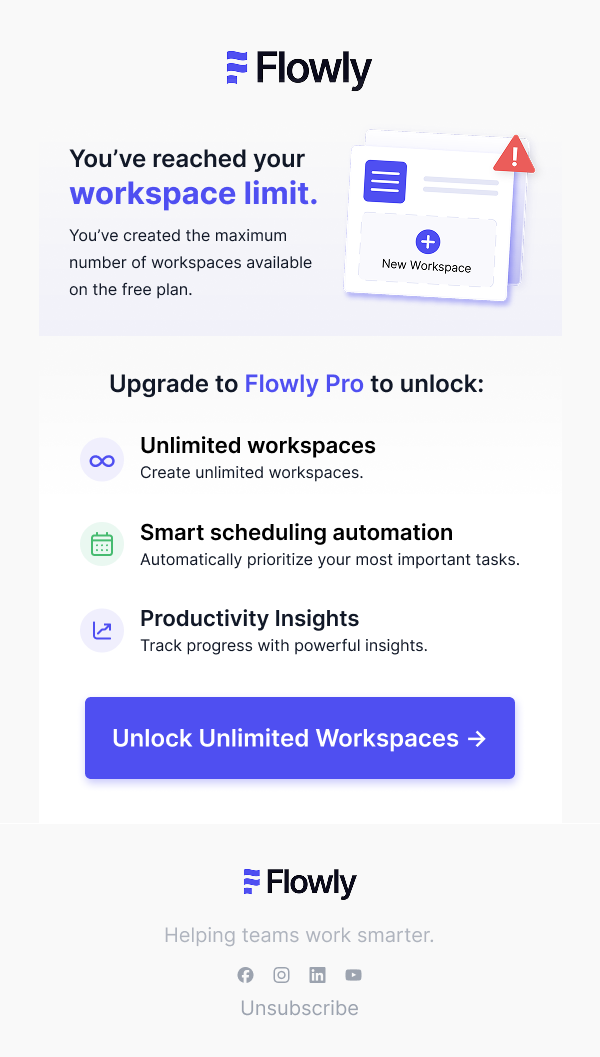
Email 1 — Limit Reached Notification
Objective
Create urgency by highlighting an approaching limitation while reinforcing the value already achieved.
Create urgency by highlighting an approaching limitation while reinforcing the value already achieved.
Key Tactics
• Usage-based trigger activation
• Benefit-led messaging
• Contextual upgrade recommendation
• Usage-based trigger activation
• Benefit-led messaging
• Contextual upgrade recommendation
Step 2 — Feature Reinforcement
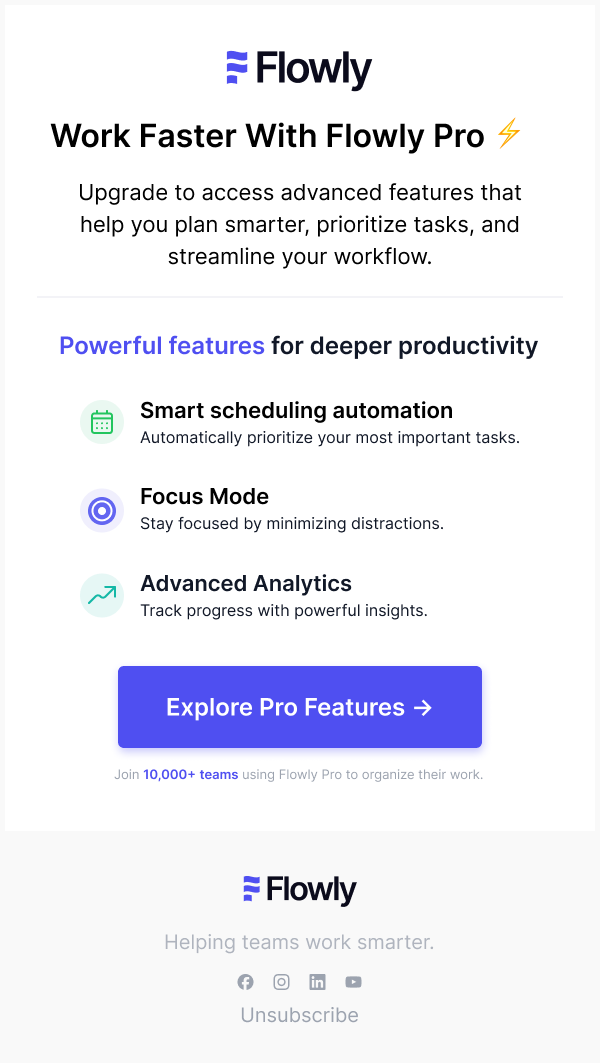
Email 2 — Pro Feature Education
Objective
Demonstrate how premium functionality removes existing friction and improves outcomes.
Demonstrate how premium functionality removes existing friction and improves outcomes.
Key Tactics
• Value-focused feature education
• Behavioral relevance
• Objection reduction
• Value-focused feature education
• Behavioral relevance
• Objection reduction
Step 3 — Trial Activation
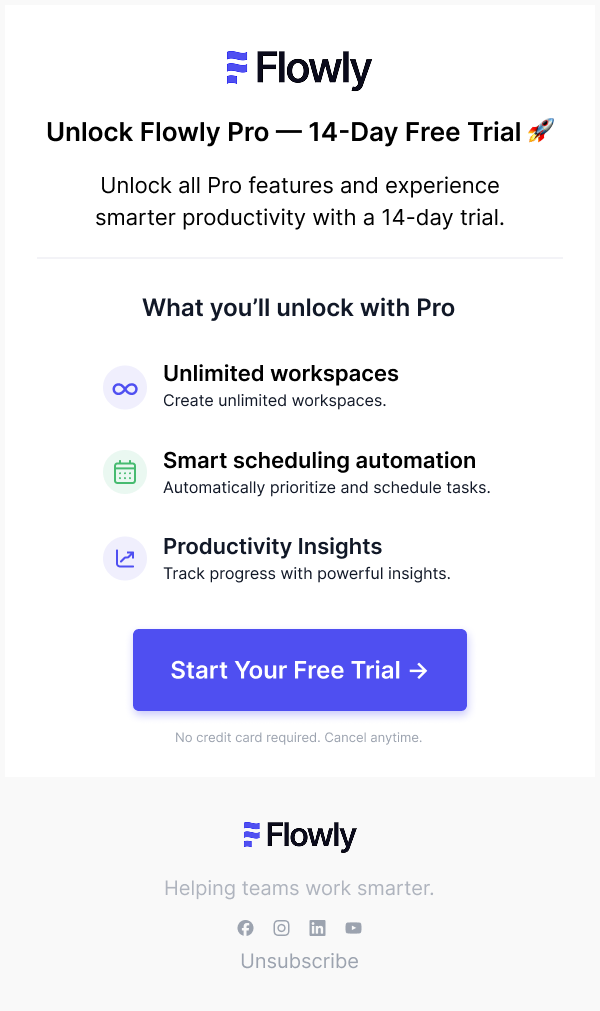
Email 3 — Free Trial Offer
Objective
Reduce commitment barriers and encourage hands-on exploration of premium features.
Reduce commitment barriers and encourage hands-on exploration of premium features.
Key Tactics
• Free trial incentive
• Risk reduction messaging
• Product-led conversion path
• Free trial incentive
• Risk reduction messaging
• Product-led conversion path
Automation Architecture
The lifecycle was built using behavioral triggers, conditional paths,
engagement filters, and conversion exits.
engagement filters, and conversion exits.
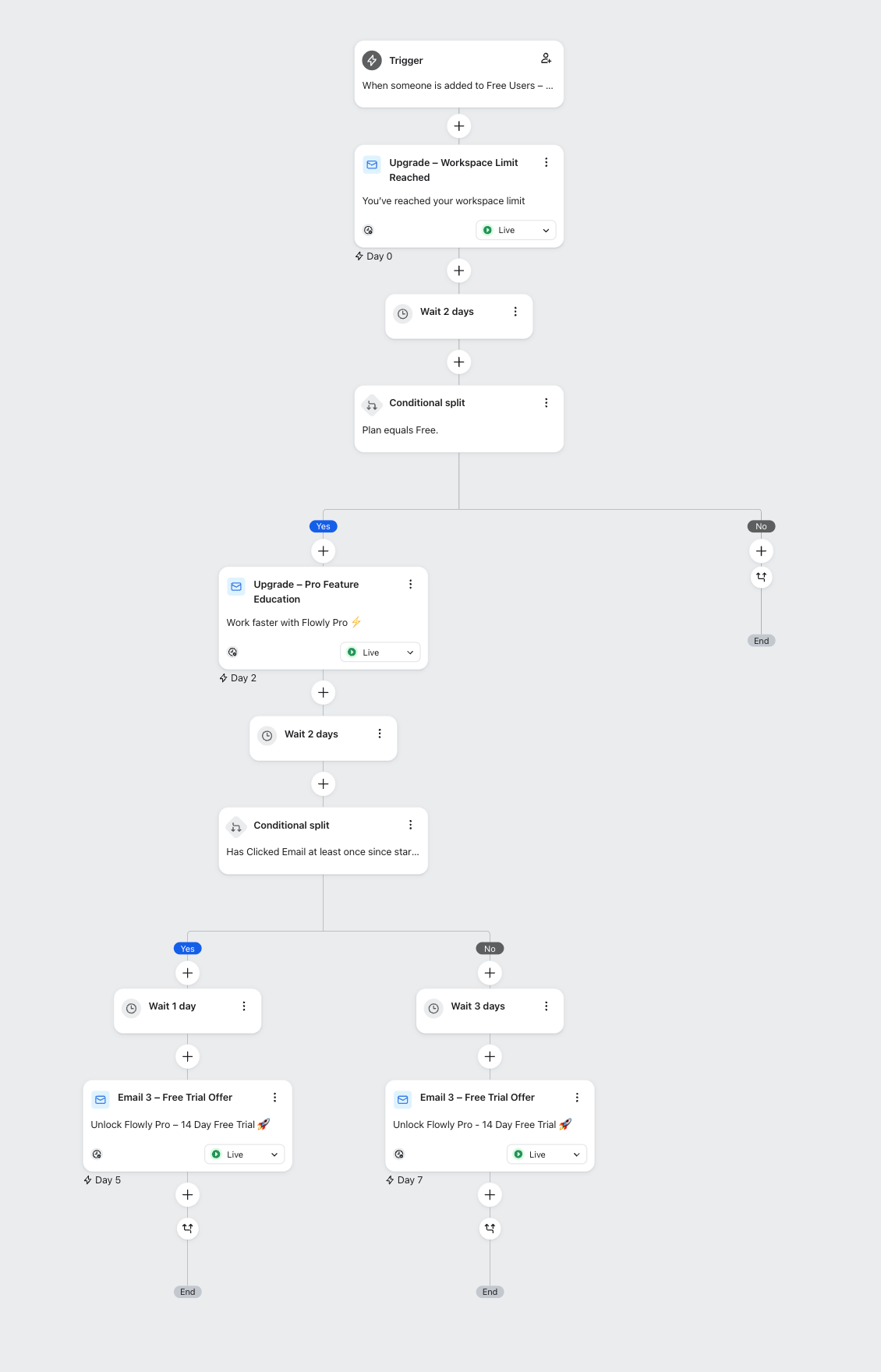
Lifecycle Automation
Core Logic
• Usage threshold initiates upgrade sequence
• User engagement determines message progression
• Trial activation removes users from promotional paths
• Paid conversion exits users from the lifecycle
• Usage threshold initiates upgrade sequence
• User engagement determines message progression
• Trial activation removes users from promotional paths
• Paid conversion exits users from the lifecycle
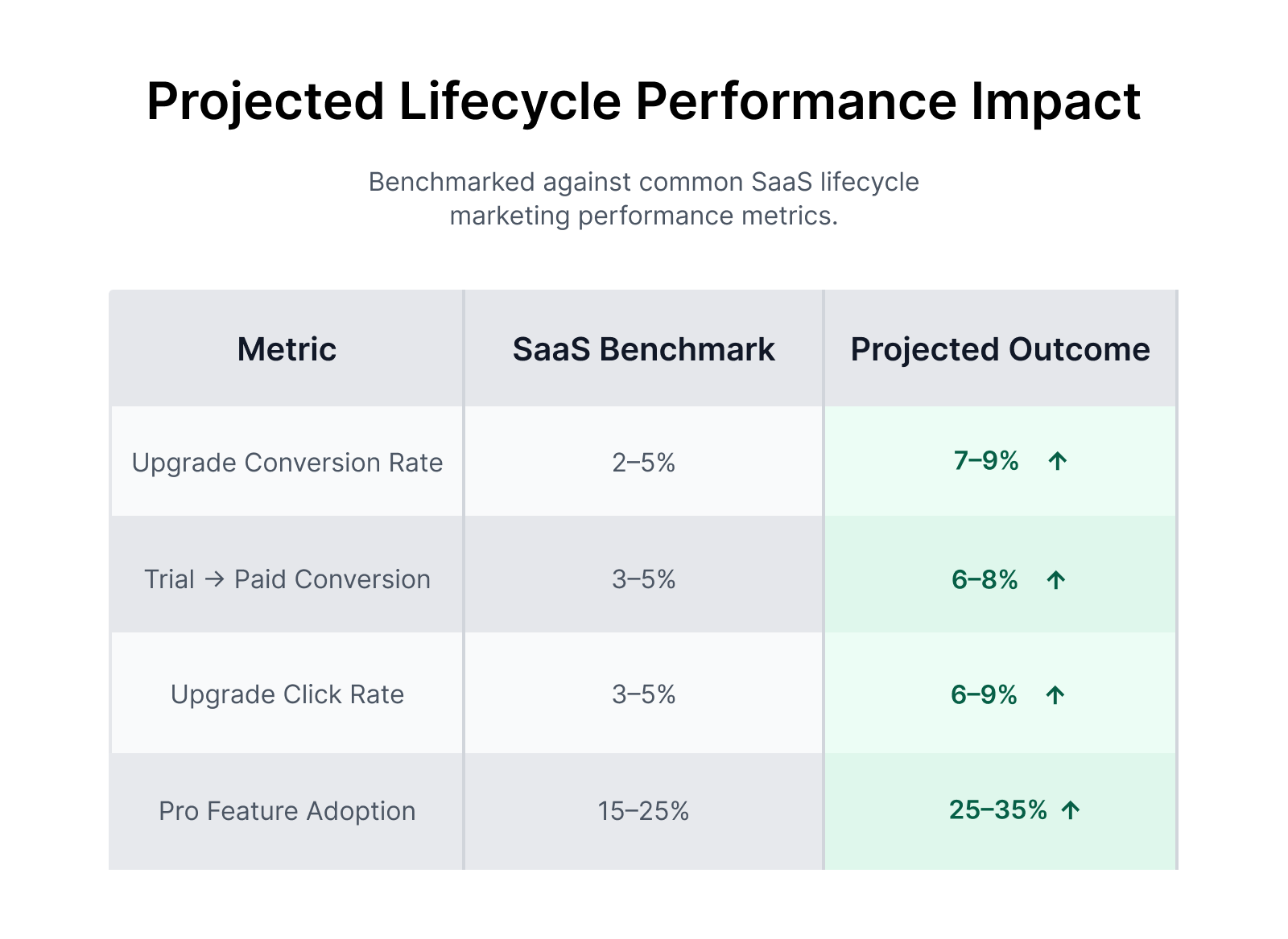
Key Takeaway
Effective upgrade journeys are driven by user behavior, not arbitrary timelines. By aligning monetization messaging with demonstrated product value, the lifecycle creates a more natural path from engagement to conversion while maintaining a positive user experience.