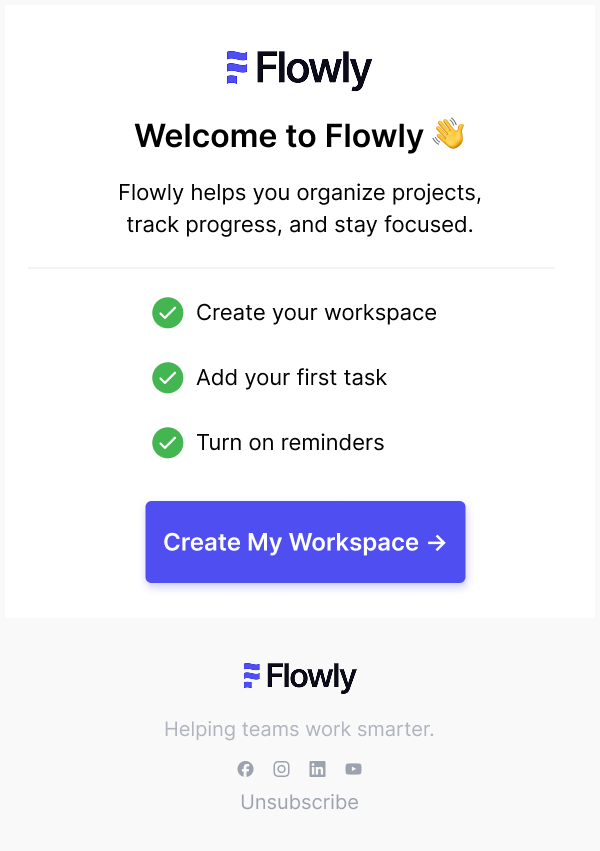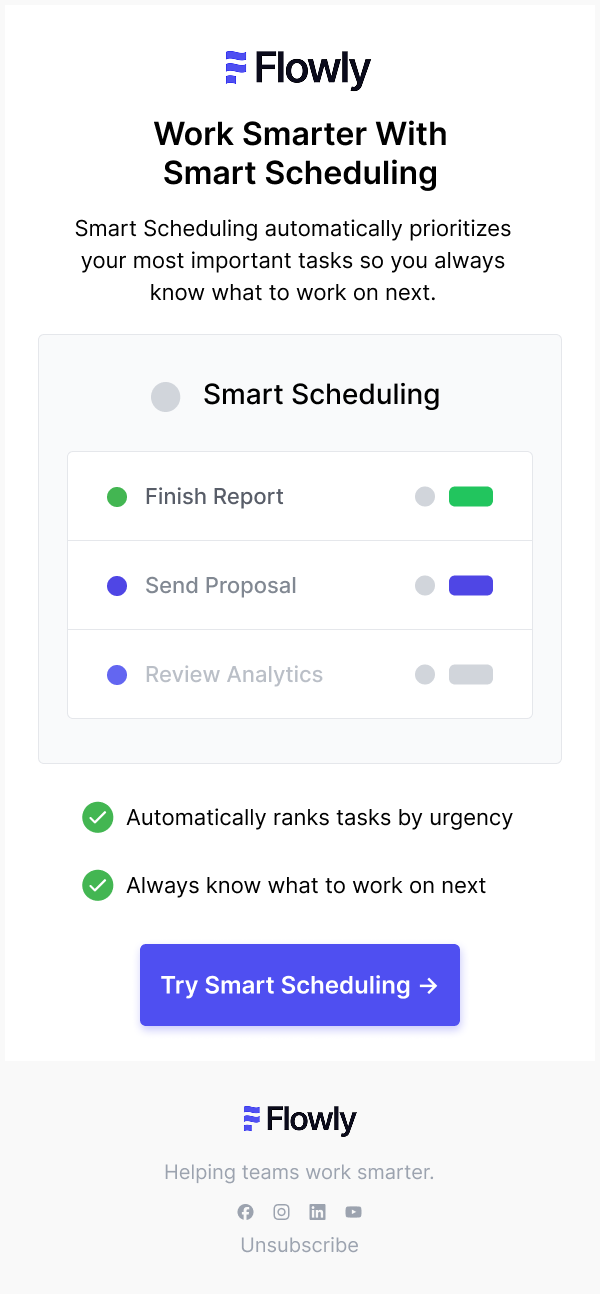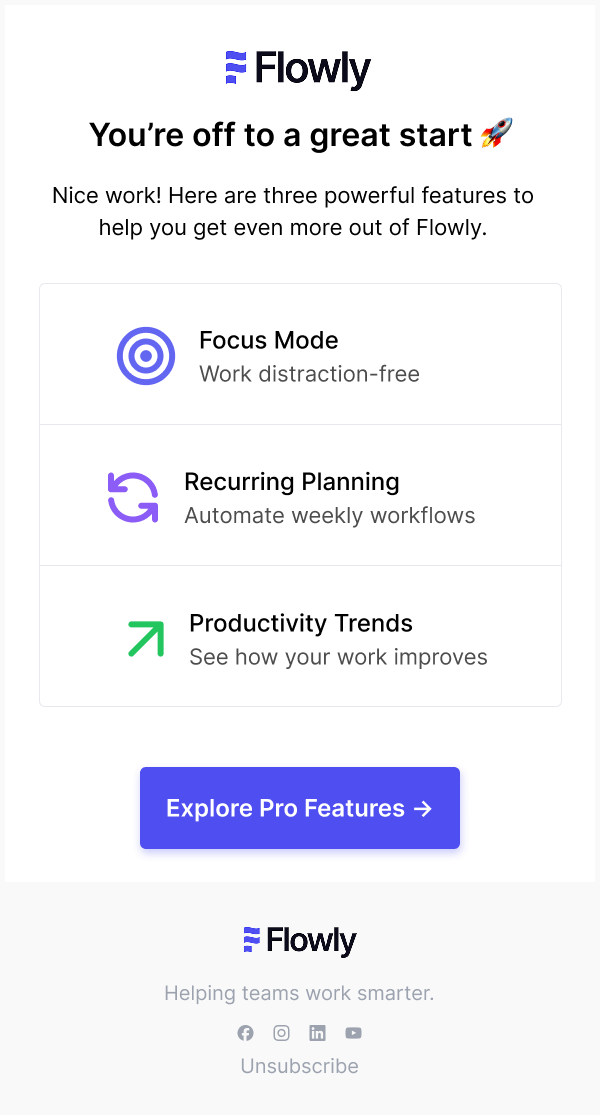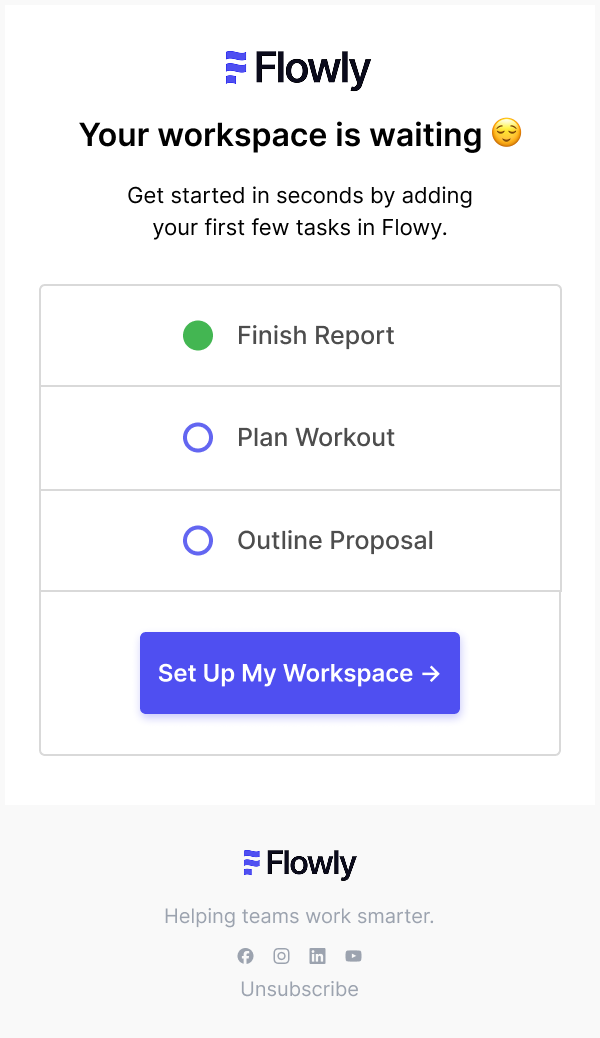
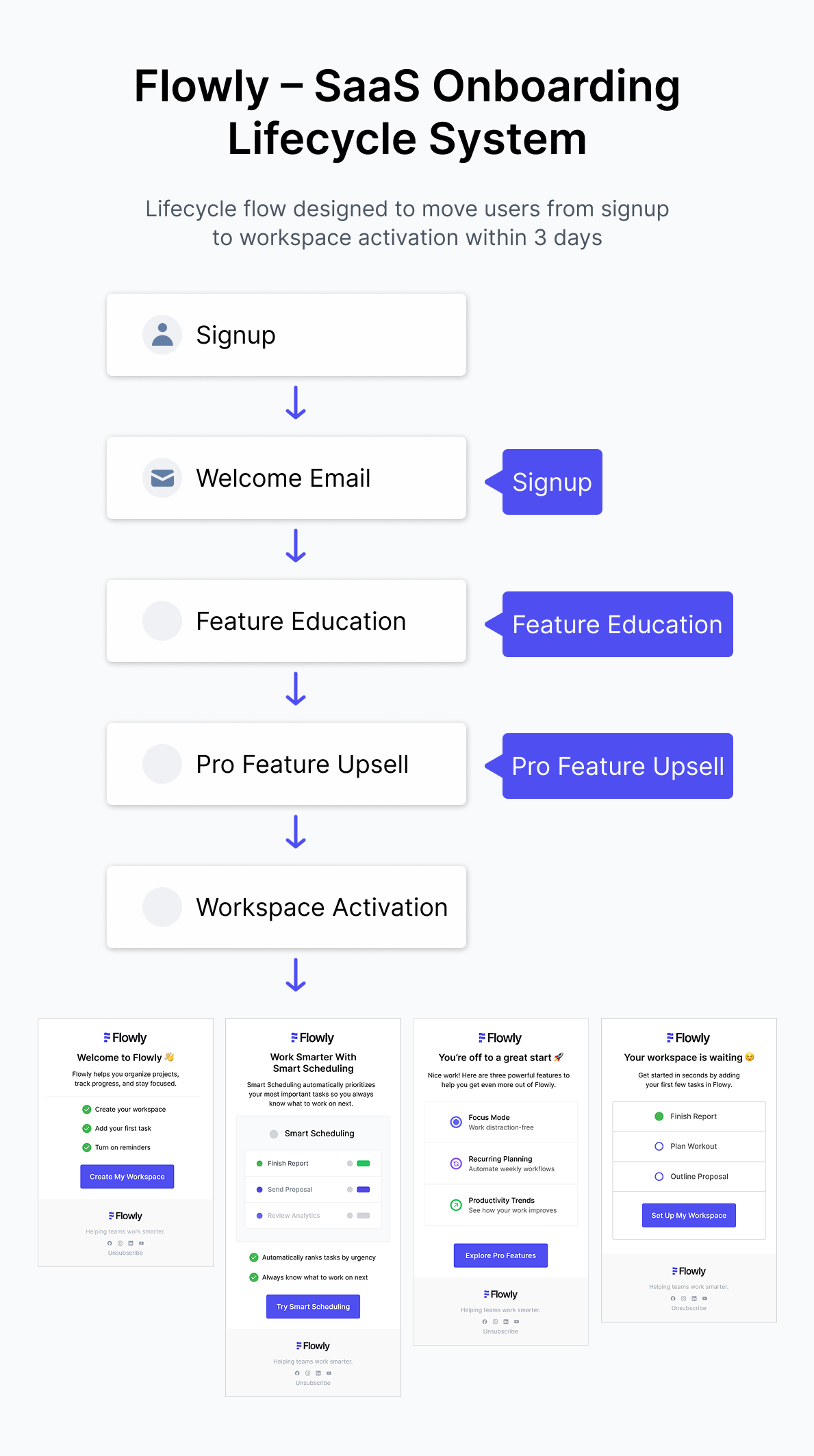
Designed a behavior-based onboarding lifecycle in Klaviyo to improve activation, accelerate feature adoption, and increase trial-to-paid conversion.
Project Details
Platform: Klaviyo + Figma
Trigger: Added to List (Signup)
Segmentation: Behavioral (Activation + Engagement-Based)
Automation Logic: Conditional Splits • Time Delays • Exit on Activation
Trigger: Added to List (Signup)
Segmentation: Behavioral (Activation + Engagement-Based)
Automation Logic: Conditional Splits • Time Delays • Exit on Activation
The Challenge
Most SaaS products don't struggle with acquisition but they struggle with activation.
Only a small percentage of users experience meaningful product value after signup. Many abandon the product before completing key actions due to feature overload, generic onboarding experiences, and messaging that lacks behavioral context.
Flowly needed a lifecycle strategy that would guide users toward activation while creating a foundation for long-term engagement and conversion.
Strategic Approach
Rather than sending every user through the same onboarding sequence, I designed a lifecycle framework that adapts based on user behavior.
The strategy focused on four principles:
• Drive activation before monetization
• Introduce features progressively
• Personalize messaging based on engagement
• Deliver upgrade messaging only after value is established
• Introduce features progressively
• Personalize messaging based on engagement
• Deliver upgrade messaging only after value is established
The result was a scalable lifecycle architecture that aligns communication with user intent and product maturity.
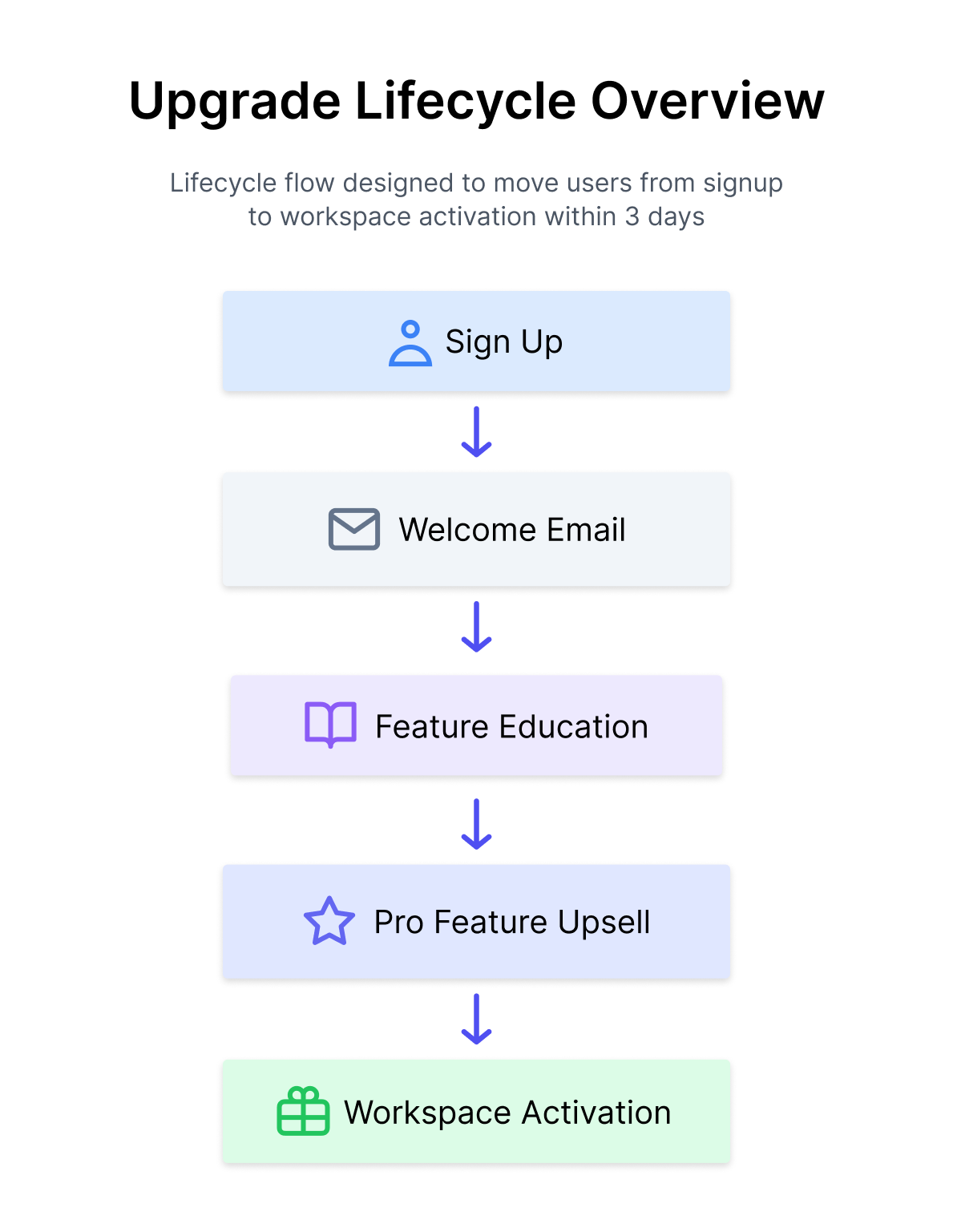
Lifecycle Architecture
The onboarding system was structured around four behavioral stages:
• Activation: Guide users toward their first successful product outcome.
• Feature Education: Increase adoption by introducing capabilities at the appropriate moment.
• Product Expansion: Demonstrate additional use cases and encourage deeper engagement.
• Behavioral Segmentation: Adapt content, timing, and offers based on user activity and engagement signals.
Identifying the Drop-Off
Before developing the lifecycle strategy, I mapped the primary points where users disengaged.
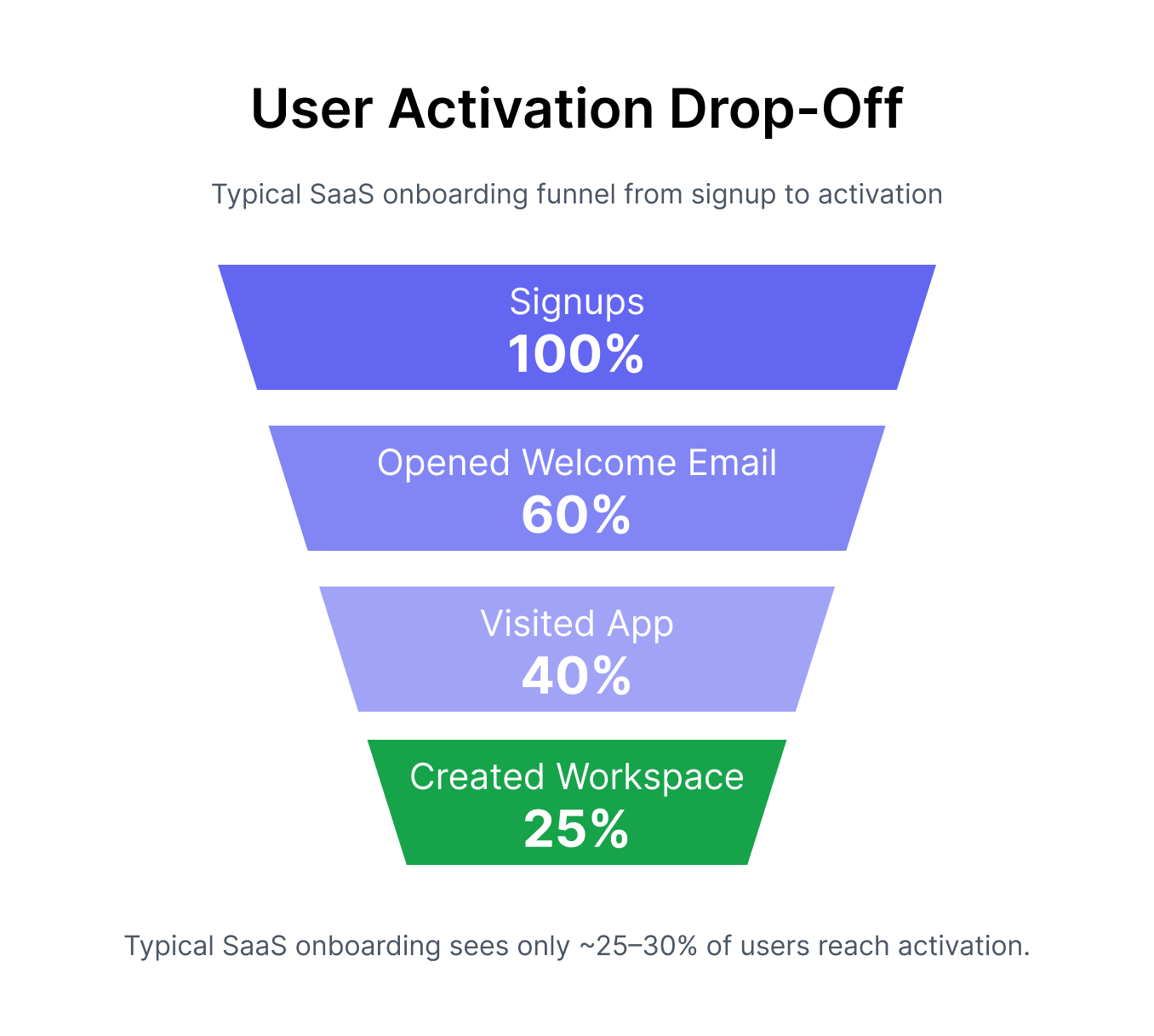
Key observations included:
• Significant drop-off before activation milestones
• Reduced engagement after initial product exploration
• Upgrade messaging appearing before users experienced value
• Reduced engagement after initial product exploration
• Upgrade messaging appearing before users experienced value
These insights informed both the sequencing and segmentation strategy used throughout the lifecycle.
Stage 1 — Activation
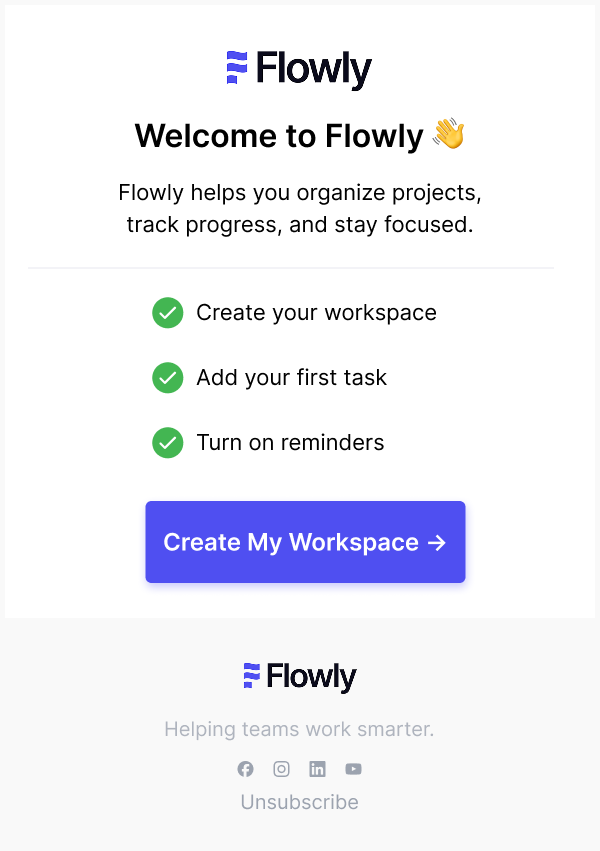
Objective
Help users achieve their first meaningful success as quickly as possible.
Key Tactics
• Clear onboarding path
• Single-action messaging
• Early value demonstration
• Single-action messaging
• Early value demonstration
Stage 2 — Feature Education
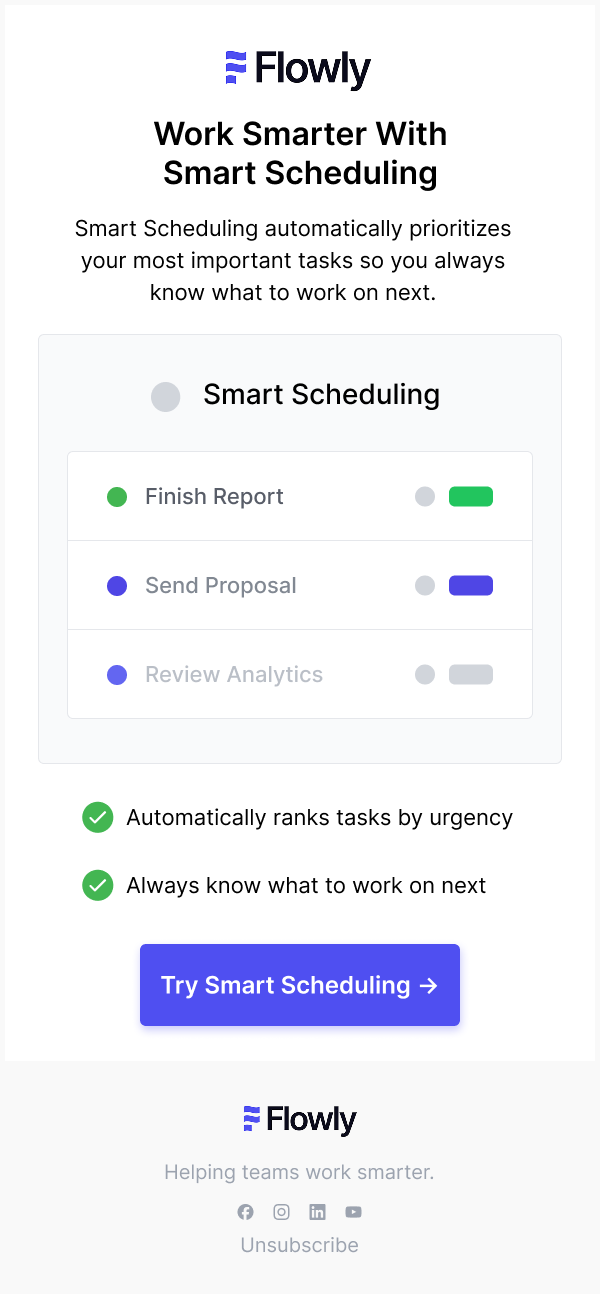
Objective
Increase adoption of core product functionality.
Increase adoption of core product functionality.
Key Tactics
• Progressive feature introduction
• Contextual education
• Behavior-triggered content
• Progressive feature introduction
• Contextual education
• Behavior-triggered content
Stage 3 — Product Expansion
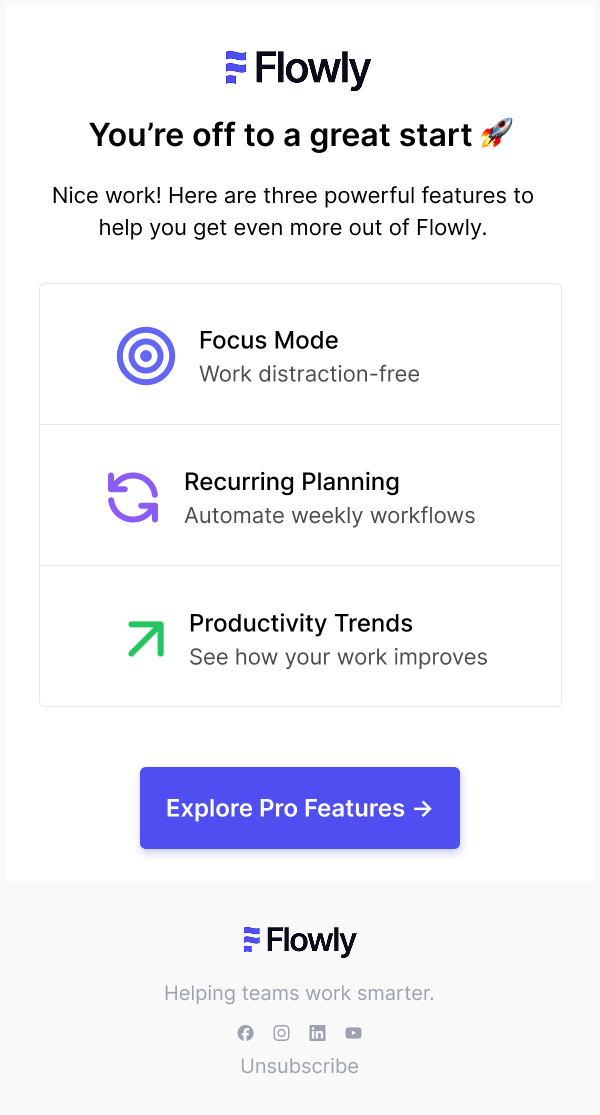
Objective
Encourage deeper product engagement and expanded use cases.
Encourage deeper product engagement and expanded use cases.
Key Tactics
• Advanced feature discovery
• Workflow expansion opportunities
• Continued value reinforcement
• Advanced feature discovery
• Workflow expansion opportunities
• Continued value reinforcement
Stage 4 — Behavioral Segmentation
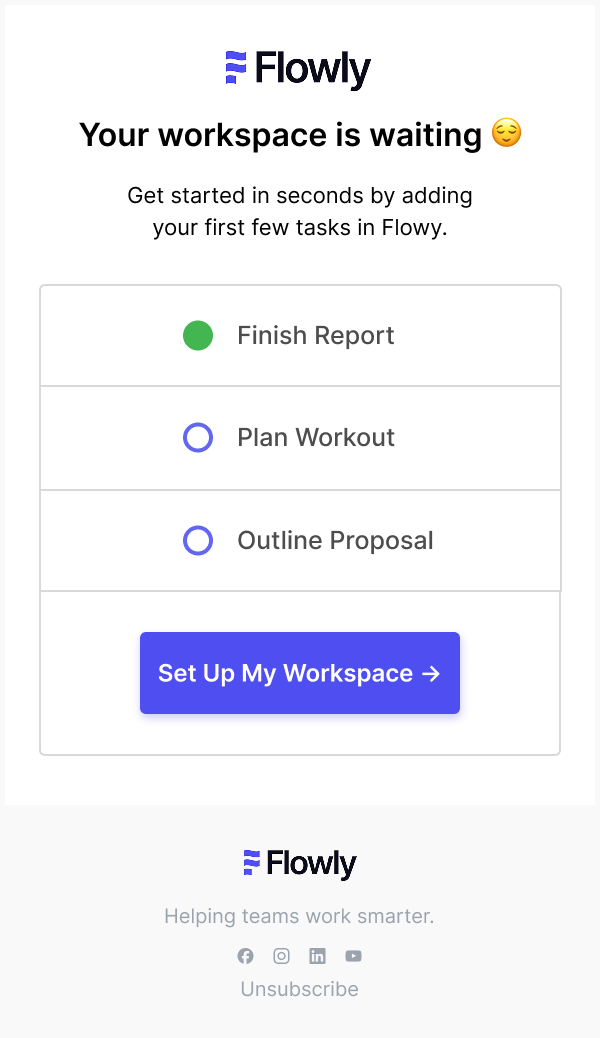
Objective
Deliver more relevant experiences based on user behavior.
Deliver more relevant experiences based on user behavior.
Key Tactics
• Engagement-based segmentation
• Personalized content paths
• Dynamic lifecycle progression
• Engagement-based segmentation
• Personalized content paths
• Dynamic lifecycle progression
Automation Logic
The lifecycle was built using conditional paths, behavioral triggers, engagement filters, and activation-based exits.
The lifecycle was built using conditional paths, behavioral triggers, engagement filters, and activation-based exits.
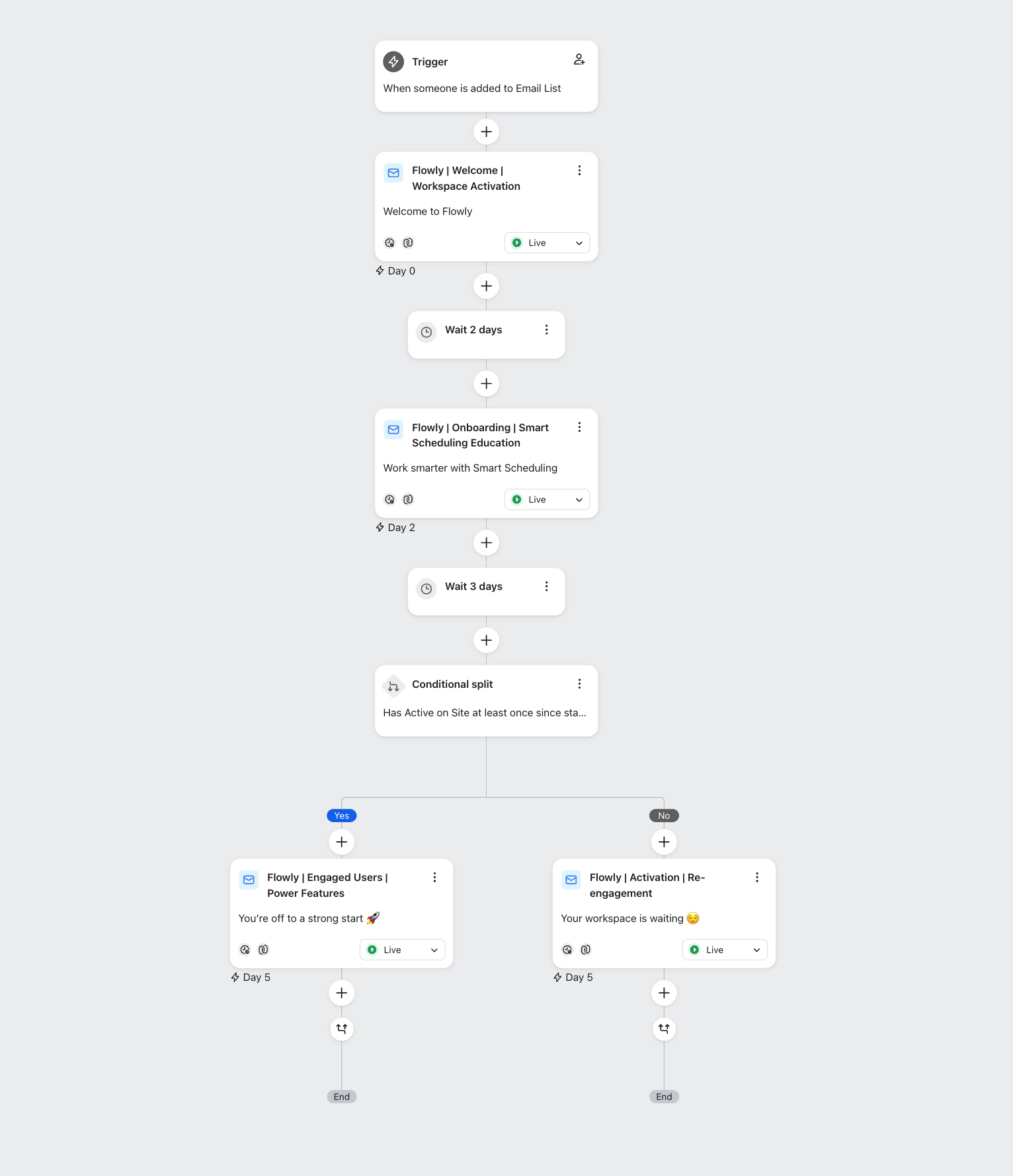
Core Logic
• Signup initiates onboarding sequence
• Activation events remove users from onboarding paths
• Engagement determines educational content delivered
• Segments dynamically update based on behavior
• Signup initiates onboarding sequence
• Activation events remove users from onboarding paths
• Engagement determines educational content delivered
• Segments dynamically update based on behavior
Expected Business Impact
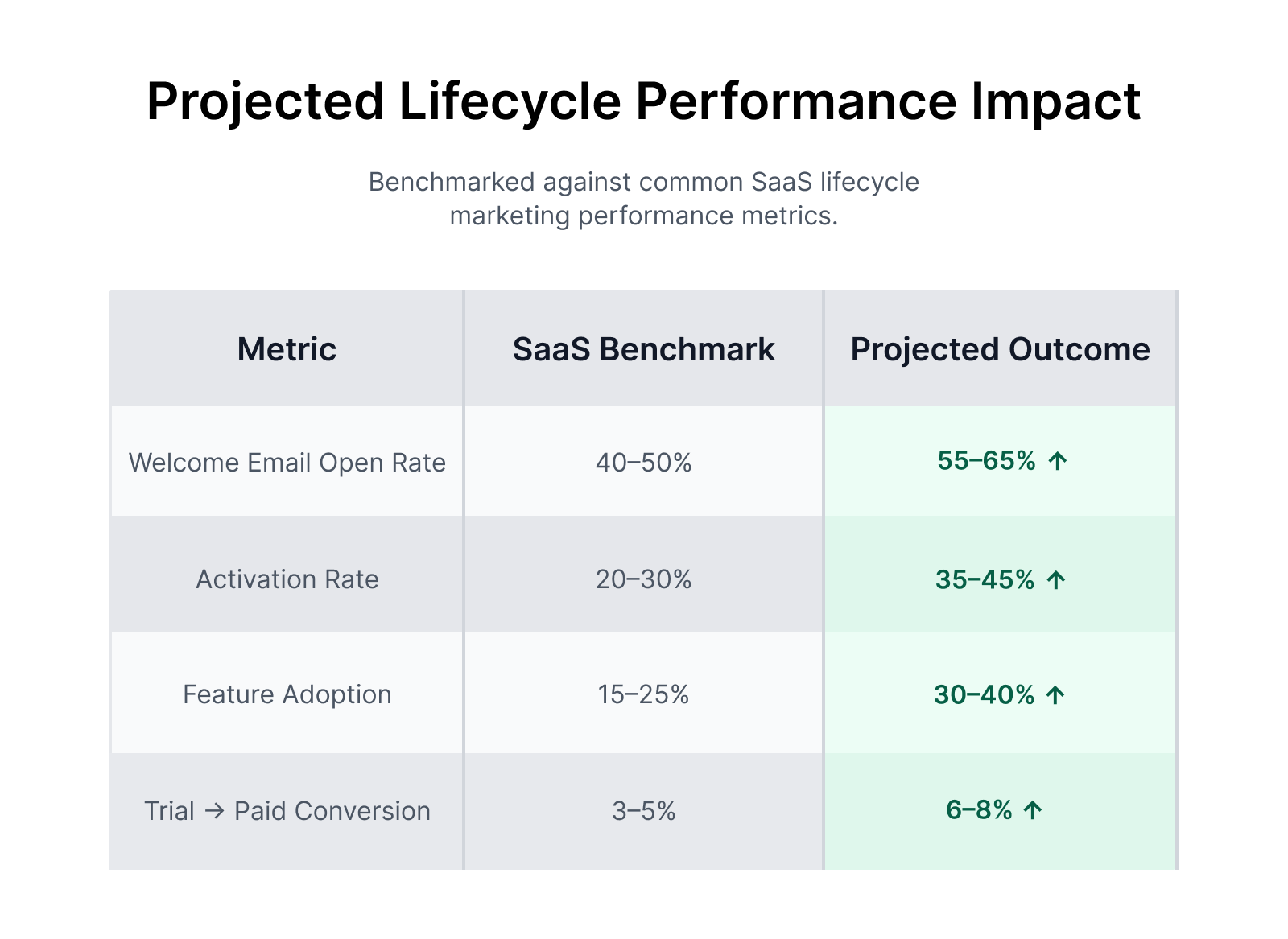
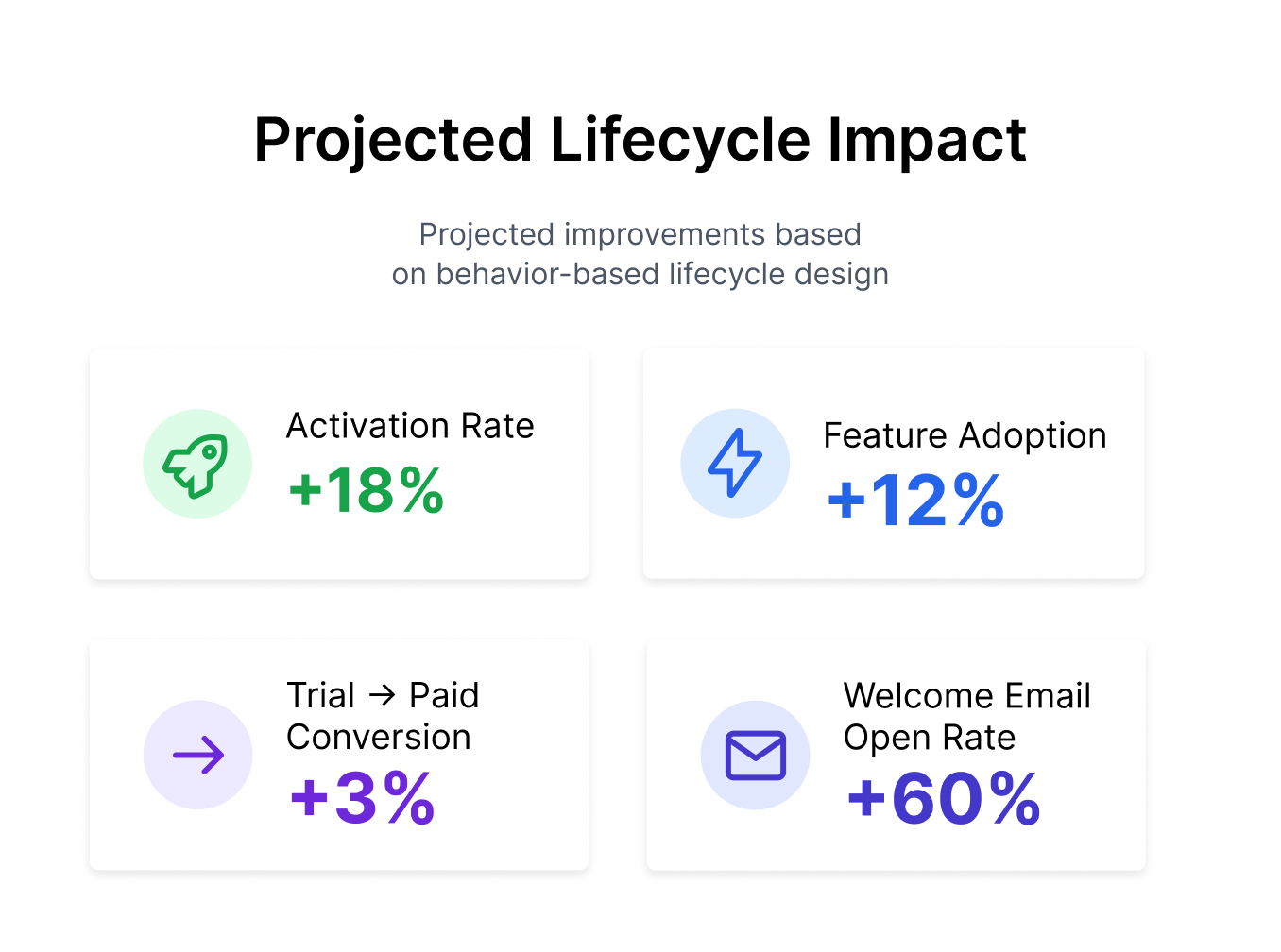
The lifecycle was designed to improve onboarding efficiency while supporting long-term retention and conversion goals.
Key Takeaway
Effective lifecycle marketing isn't about sending more emails—it's about delivering the right message at the right moment. By aligning onboarding with behavioral signals rather than fixed timelines, Flowly creates a more personalized path to activation, adoption, and long-term customer value.